 Русский
 English
 हिन्दी
 Türkçe
 Español
 Deutsch
 Italiano
 Français
 Português
 Polski
 中文
中文 Bahasa Indonesia
 日本語
日本語 বাংলা
বাংলা Tagalog
 Ελληνικά
 Български
 Svenska
 Tiếng Việt
 한국어
한국어 Suomi
Suomi Norsk
Norsk Nederlands
 فارسی
فارسی
The Martingale strategy is the most famous roulette betting system: after every loss the bet is doubled, and the very first win returns all losses plus the size of the initial bet. In roulette the Martingale is used on bets with a chance of around 50% - red/black, odd/even. The idea is simple, which is why doubling the bet so appeals to beginners. But behind this apparent logic lie table limits, a finite bankroll and the unchanging house edge. Let's break down the mechanics step by step, calculate how much money a losing streak requires, and say honestly where the system breaks down.
The essence of the system
The Martingale belongs to the negative-progression systems: the bet grows after a failure, not after a success. The logic is built on bets that pay 1:1, where the chance of winning is close to half. You choose a base bet, for example 1 unit. You lose - you bet 2, lose again - 4, then 8 and so on. As soon as your outcome lands, you recover all previous losses and get a profit equal to the initial bet. After a win the progression resets, and the cycle starts again from the base amount.
Step-by-step example and progression table
Suppose the base bet is 1 dollar and you bet on red. As long as black or zero comes up, the bet is doubled. The table shows how the bet and the total amount staked grow over a run of consecutive losses.
| Consecutive losses | Bet | Total staked | Profit on a win |
|---|---|---|---|
| 1 | 1 | 1 | 1 |
| 2 | 2 | 3 | 1 |
| 3 | 4 | 7 | 1 |
| 4 | 8 | 15 | 1 |
| 5 | 16 | 31 | 1 |
| 6 | 32 | 63 | 1 |
| 7 | 64 | 127 | 1 |
| 8 | 128 | 255 | 1 |
The key observation: no matter how many rounds the streak lasts, a win returns only one base unit of profit. Meanwhile the amount at risk grows exponentially - after just eight losses in a row, 255 units are on the line for a profit of one.
Why it seems impossible to lose - and why that is not so
Over a short stretch the Martingale really does often bring a small plus: long streaks of one colour are rare, and the player usually manages to recover. Hence the feeling that the system does not break. In reality it is held back by three limitations.
- Table limit. Every table has a maximum bet. Once you reach it, you can no longer double, and a losing streak locks in a loss there is nothing left to win back.
- Finite bankroll. Doubling grows faster than it seems. Not everyone has enough money for 10-12 steps of the progression, and it is exactly such streaks that zero out the account.
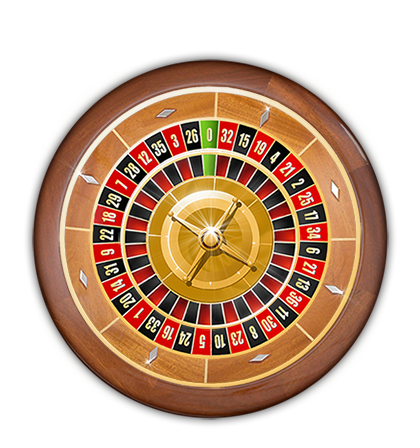
- Zero and the house edge. The European wheel has 37 pockets, and the zero makes a bet on red/black lose roughly 48.6% of the time rather than 50%. The 2.7% house edge does not go anywhere - no betting scheme removes it.
The Martingale does not change the probability of an individual spin. It merely redistributes the outcome: many small wins against a rare but large loss. The mathematical expectation stays negative. More on the role of the zero - in the article what the zero in roulette is.

How much bankroll you need
To survive a losing streak, the bankroll must cover the whole progression. The table shows how many units a streak of a given length requires at a base bet of 1 and what bet the final step will need.
| Streak length | Bet on the final step | Total bankroll |
|---|---|---|
| 1 | 1 | 1 |
| 3 | 4 | 7 |
| 5 | 16 | 31 |
| 7 | 64 | 127 |
| 10 | 512 | 1023 |
| 13 | 4096 | 8191 |
At a base bet of just 1 dollar, a streak of 13 losses requires more than 8000 dollars of bankroll and a bet of 4096 on the final step - which most tables will not accept. A streak of 13 identical outcomes is rare, but over a distance of thousands of spins it occurs inevitably.
Which bets it is used on
The Martingale works only on bets that pay 1:1, where doubling covers past losses:
- red / black;
- odd / even;
- high / low (1-18 / 19-36).
On bets that pay 2:1 and higher (dozens, columns, straight numbers) simple doubling does not make up the loss, so the scheme is not intended for them. On other approaches to bet sizing - in the piece on roulette betting systems.
The reverse Martingale
The reverse Martingale (Anti-Martingale) flips the logic: the bet is doubled after a win, not after a loss. The goal is to catch a short winning streak and lock it in, risking only the initial bet and the money already won. The downside is that a single loss at the end of the streak takes away all the accumulated profit, so you set in advance the number of doublings after which the progression resets.
Losing streaks and the gambler's fallacy
The Martingale is closely tied to the "gambler's fallacy" - the belief that after a long streak of one colour the other "has to" come up. This is a mistake: the wheel has no memory, every spin is independent, and the probability of red after ten blacks in a row is still the same, around 48.6%. A long streak does not raise the chance of the opposite outcome on the next round.
Such streaks are easy to track through statistics. Our free streak tracker shows how long colours, parity, dozens and sectors have not appeared on live tables - see the roulette statistics section. This helps you see the real picture instead of relying on intuition. A comparison of systems and their risks - in the review of roulette strategies.
An honest conclusion
The Martingale is a simple and vivid way to structure your bets, but not a system for a steady win. It gives frequent small pluses at the cost of rare large minuses, and table limits and a finite bankroll sooner or later cut the progression short. The system does not cancel the 2.7% house edge on the European wheel. Treat it as an exercise in bankroll management and stake only the money you are ready to lose. Play responsibly.


