 Русский
 English
 हिन्दी
 Türkçe
 Español
 Deutsch
 Italiano
 Français
 Português
 Polski
 中文
中文 Bahasa Indonesia
 日本語
日本語 বাংলা
বাংলা Tagalog
 Ελληνικά
 Български
 Svenska
 Tiếng Việt
 한국어
한국어 Suomi
Suomi Norsk
Norsk Nederlands
 فارسی
فارسی
The question "how to calculate roulette" is asked by almost everyone who sees the wheel for the first time and thinks a formula is hidden behind the chaos of numbers. The short and honest answer: you cannot mathematically compute the next outcome, and this applies both to online roulette with a random number generator and to a live table with a croupier. Let's work out whether roulette can be calculated in any way at all, where the legends of "hacked" wheels came from and what in statistics really brings benefit, without promises of an easy win.
Why the next spin cannot be computed
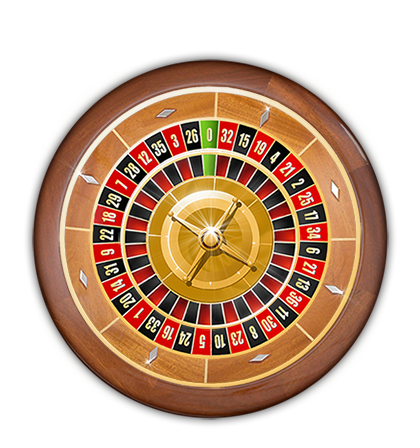
Roulette is arranged so that each spin is independent of the previous ones. The wheel does not remember what came up an hour ago and does not strive to "even out" the statistics. In the European version there are 37 pockets (from 0 to 36), and over a long distance the probability of any number stays 1 in 37 regardless of history.
In online roulette the outcome is determined by a certified random number generator, in the live format - by a physical wheel and ball under the studio's supervision. In both cases there is no memory and no pattern that can be plugged into an equation. That is exactly why a "run of ten reds" does not raise the chance of black on the next spin: this is a common misconception known as the gambler's fallacy.
The house edge does not go anywhere
Another reason why roulette cannot be "calculated" into profit is the built-in house edge. It is created by the zero: payouts are calculated as if there were 36 pockets, while there are actually 37, and this difference is the house edge. No sequence of bets changes these numbers. Whatever system a player applies, the mathematical expectation of each bet stays negative.
| Version | Pockets | House edge | RTP |
|---|---|---|---|
| European | 37 (single zero) | 2.7% | 97.3% |
| American | 38 (0 and 00) | 5.26% | 94.74% |
| French (La Partage) | 37 | about 1.35% | up to 98.65% |
The difference between the versions is only in the size of this edge, not in its presence. More on the zero and the return is in the article on roulette RTP.
Historical methods of "calculation": why they barely work
In history there were real attempts to beat roulette not with a formula but with the physics of the wheel. Two approaches became legends.
- Biased wheel. On old mechanical wheels, because of wear and defects, some numbers came up more often. Players recorded results for weeks, looked for a bias and bet on the "heavy" sectors. The method required thousands of observations and a real defect of a particular table.
- Dealer signature. Some croupiers launched the ball with a similar force for years, and experienced observers tried to guess the stopping zone from the speed of the wheel and the ball.
On modern equipment both approaches are almost inapplicable. Wheels in licensed studios are regularly calibrated and tested for bias, balls and speeds are changed, and in online versions with an RNG there is no physical wheel at all. What once worked on the worn-out hardware of the last century does not carry over to a certified live table.
Progressions are not calculation but bet management
Martingale, D'Alembert, Fibonacci and similar schemes are often passed off as a way to "calculate" the game. This is not so. A progression does not predict a single number - it only sets how to change the bet size after a win or a loss. This is bankroll management, not computing the outcome.
Such systems can make the game more disciplined and help control spending, but they do not remove the house edge and do not turn a negative expectation into a positive one. An overview of the popular approaches and their honest limitations is gathered in the material on roulette strategies.
What you really can do: analysing statistics after the fact
The real benefit is not in prediction but in observation. The statistics of winning numbers can be analysed after the fact: look at frequencies, numbers that have not come up for a long time, streaks of colours and the distribution across the wheel's sectors. This gives no advantage over the casino, but it helps to play consciously and keep discipline.
- Frequencies - how often each number has come up over a chosen period.
- Streaks - how long a colour, even/odd or a dozen has held in a row.
- Sectors - the distribution of hits across the zones of the real wheel, not by the numbers of the layout.
Such analysis is convenient to carry out on live data. How to do it in practice is described in the article on online roulette analysis, and the live statistics of tables can be viewed in the roulette statistics section.
Conclusion
You cannot calculate roulette in the sense of "finding out the next number": spins are independent, neither an RNG nor an honest wheel has memory, and the house edge is built into the payouts themselves. Historical methods like the biased wheel stayed in the past along with imperfect equipment. What is really in a player's hands is discipline, control of the bankroll and the analysis of statistics for observation. Treat roulette as a game of chance and play responsibly.